On Tuesday we ventured out on a tour called “Wildlife, Waterfalls, and Wine”. We were lucky to travel in a minibus with only 4 other people. We started with a ride out of the city along the beaches of Botany Bay where Captain Cook landed. From there we drove through the Royal National Park. It is the second oldest national park: the oldest national park being Yellowstone.
Our first stop was at the family-run Symbio Wildlife Park which is active in koala bear conservation. We had a private koala experience with a keeper and learned about marsupials and their lifestyle and the health and environmental threats they face. We heard how the park is helping with research on how to protect them and develop vaccines for the health risks they face. We were able to pet one of the koalas and have pictures taken with him. They are so soft and docile. We had heard in the past it was believed that the eucalyptus leaves they eat have a narcotic effect on the koala’s which causes them to become drowsy and lethargic. The keeper told us that that is a myth. When a koala bear eats they eat so much that they need to rest while their bodies digest the meal. The keeper also told us that there are dozens of different species of eucalyptus trees and that koalas only eat a a few of the species. That makes finding a suitable habitat for the koalas as, building developments spreads, more difficult.


Marsupials have a gestation period of thirty to forty days at which time they deliver their offspring. Unlike mammals which develop to completion inside the womb, marsupials developed to completion inside the mother’s pouch. When the newborn is delivered it is the size of a peanut. The newborn moves from the birth canal with the assistance of the mother who uses her saliva to moisten her fur which leads the newborn to her pouch. All marsupial newborns look the same. There are two dots where the eyes will be and a slit where the mouth will develop. All marsupials look the same and a newborn cannot be identified until it has developed. It takes six to nine months for the newborn to develop. During that period it is never seen. The mother will deliver only one offspring at a time. Although she has the ability to feed two offspring, only one will survive.
Next we headed to the kangaroos and wallabies. We had a quick lesson on feeding them and got a bag of “roo food” to share with our new friends . When they saw the bags they seemed to come to life. Cory discovered that if you don’t hold the food in the right spot the kangaroo is happy to grab your hands and place them in a comfortable position for eating!
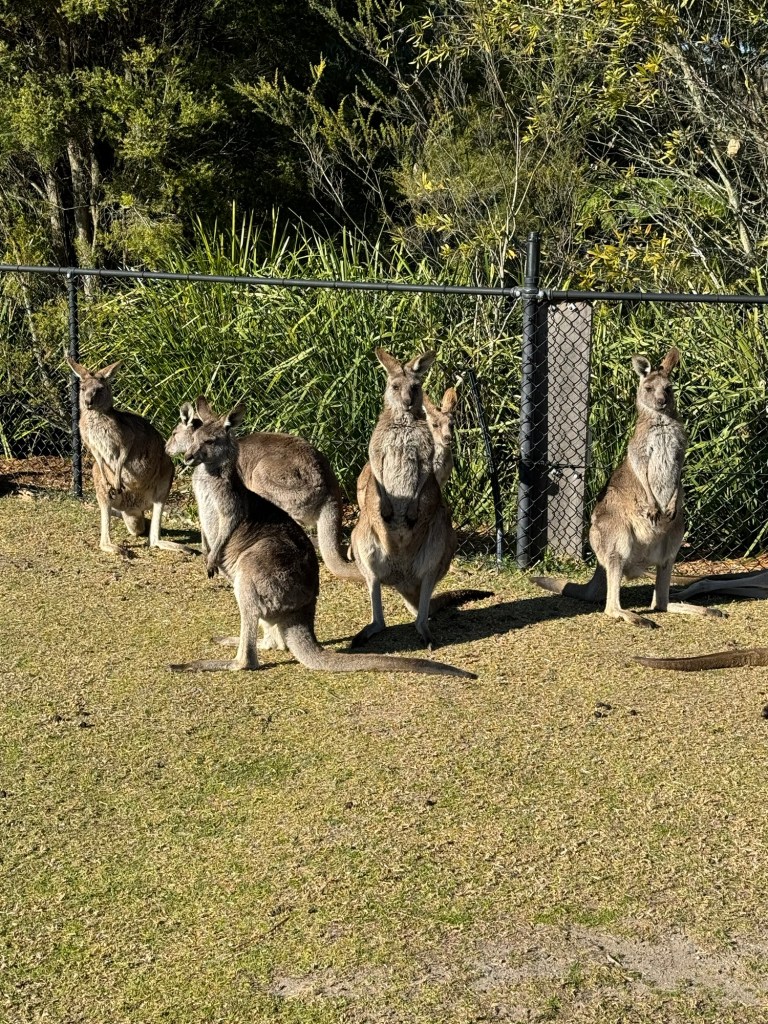
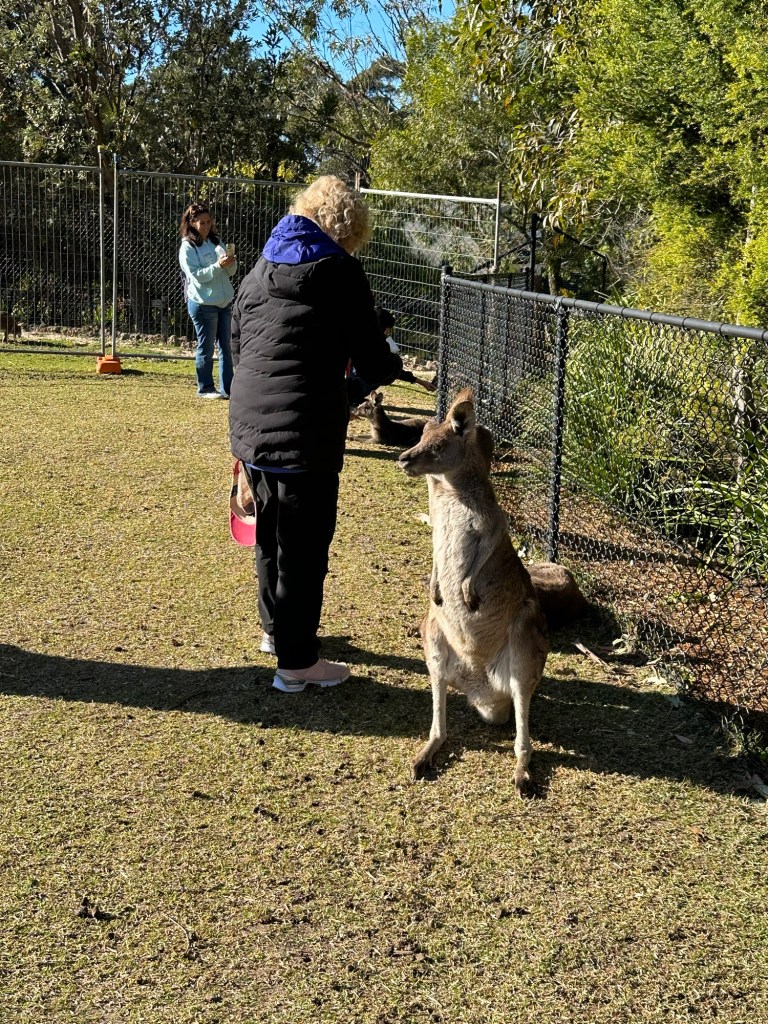
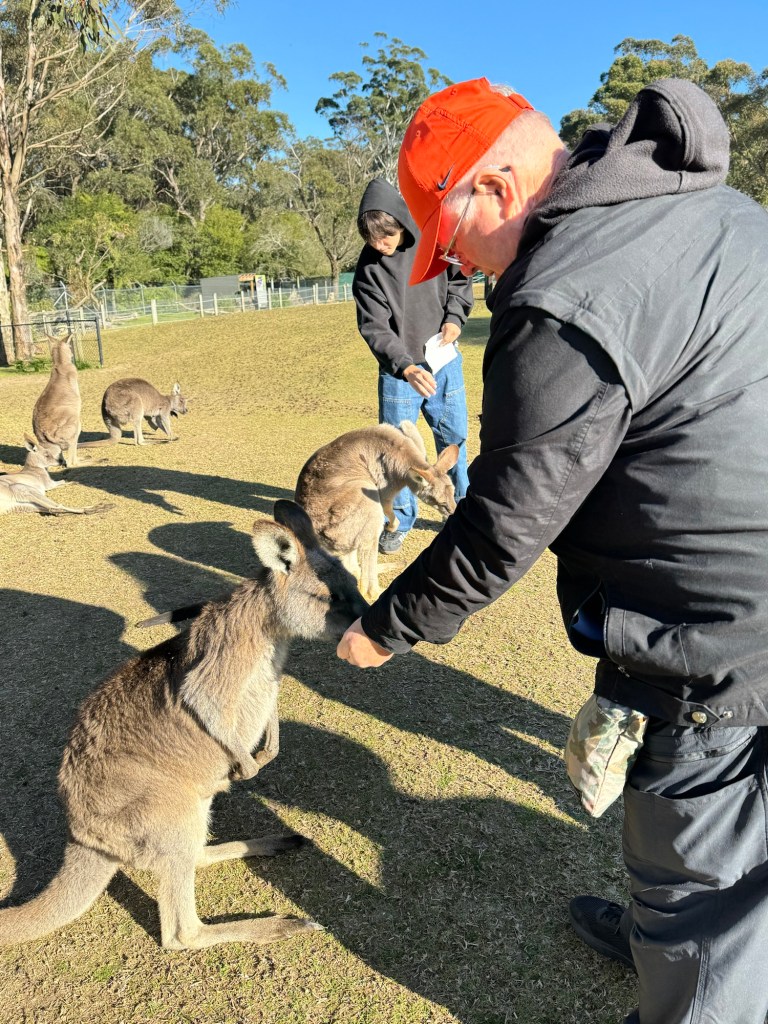
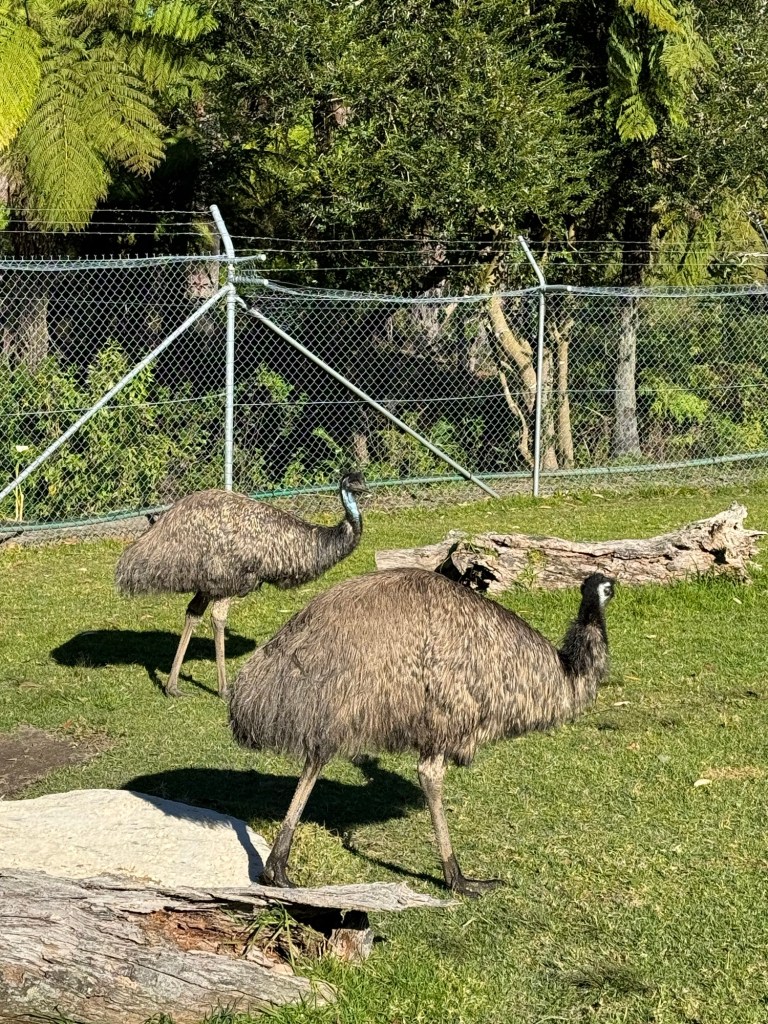
We had time in the park to also visit some of the park residents including dingoes, Tasmanian Devils, wombats, emus, meerkats, “hurty bitey” things (snakes, lizards and bugs) as well as adorable miniature monkeys. Australia has 21 of the 24 most venomous snakes in the world. They didn’t look that scary behind the glass. We had the opportunity to see a presentation on the meerkats. They only have male meerkats at the park because when the meerkats aren’t doing meerkat things they are making meerkat babies. One meerkat is the sentry. He sits up on the highest spot and watches for predators while the others dig and hunt for food. They dig so much that they have a membrane over their eyes and inside their ears to protect them from dust and dirt.


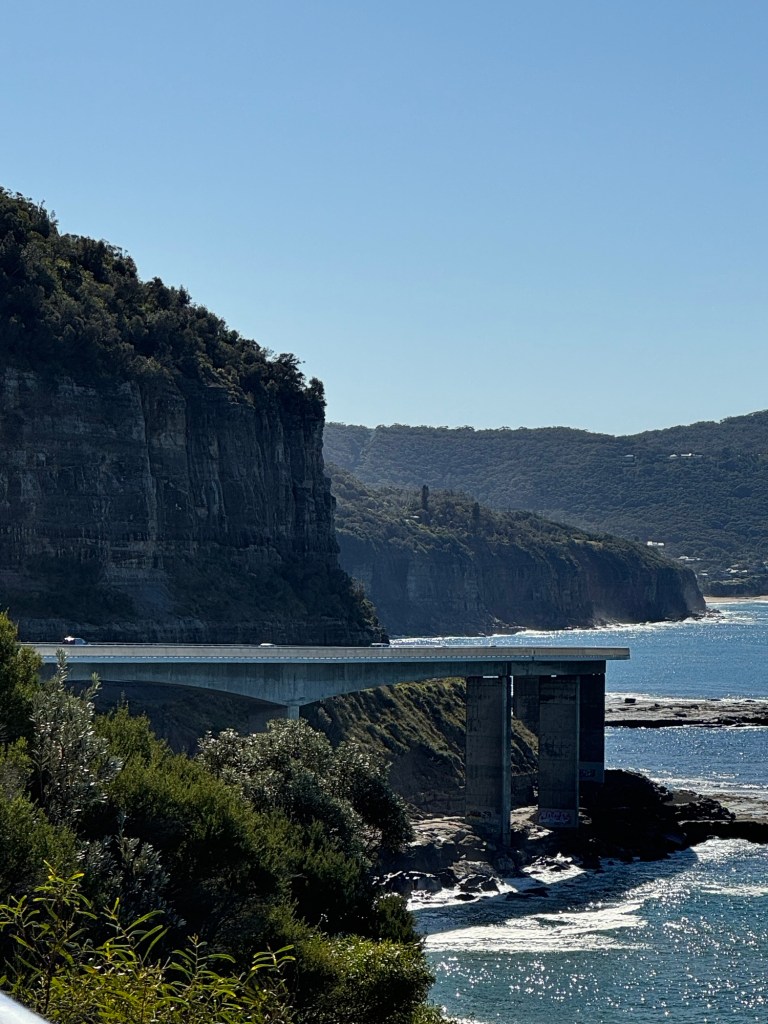
After we left the park we stopped at Bald Hill where gliders launch to the beach below. From here we also had a view of the Sea Cliff Bridge. Originally a road ran along the base of the cliffs. Erosion caused the rock face to fail and collapse onto the road which caused the road to collapse. The road was closed more than it was open. It was more economical to construct a bridge parallel to the cliffs and over the water to keep the road open than to keep repairing the road. When we drove along the Grand Pacific Drive and onto the bridge we were able to see the crumbling cliffs and the old road.

We stopped for lunch at a cafe on the beach with an ocean pool and watched the swimmers brave the cold water and breeze. An ocean pool is a protected swimming pool built on the rock base of the shore. They build concrete walls around the pool, fill the pool floor with sand, and then fill the pool with sea water. It’s the perfect place for children to learn to swim and experienced swimmers to swim laps in calm water. Watching swimmers swimming laps wearing wet suits gave us the impression that it is a lot more fun to do that in the summer.

After lunch we drove through the rainforest and into the southern highlands with a stop and “bush hike” to view the towering sandstone gorges and beautiful Fitzroy Falls in the Morton National Park. We learned that the seeds from some trees in the rainforest can only open after being exposed to fire. To help this process along the trees shed their highly flammable bark to the forest floor and wait for a lightning strike to complete the process. Meanwhile a neighboring tree adds layer after layer of insulating bark to protect it from the eventual fire. Termites pitch in to consume dead wood in the bush creating massive termite mounds!
Our last stop was at Centennial Winery for a tasting. We learned that Australia produces cool climate wines. Even thought the summer days are hot, the temperature drops in the highlands at night, producing grapes for their unique wines. On the way home we drove by a field where the kangaroos and cows were happily grazing side by side!
 Jim and Cory’s Adventures
Leave a comment