After lunch back onboard The Indian Pacific we arrived in Adelaide and ventured out to Hahndorf. It is classified as Australia’s oldest surviving German settlement and has a unique ‘village feel’ about it. Driving through the city streets we saw several cute restaurants and little shops.
We were introduced to cheese in all its forms at the Udder Delight Cheese Company. We were guided through a cheese tasting learning about different types of cheese and how they are produced. We heard how one woman’s passion for cheese grew into this thriving business.
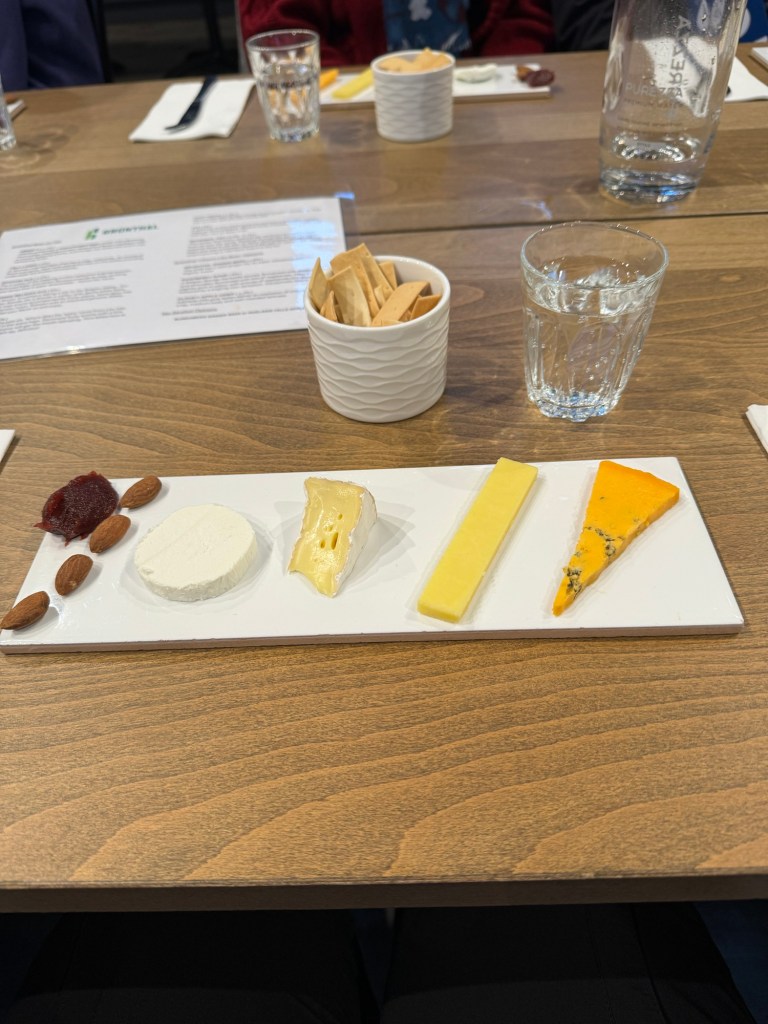
After the cheese tasting we were able to sample beer made in their brewery, the Adelaide Hills Grunthal brewery.

Next stop was Haus, a German restaurant showcasing the best in traditional German dishes. The dinner was a true Bavarian feast including appetizers of large pretzels, sausages and cheese. This was followed by Wiener schnitzel and salad.
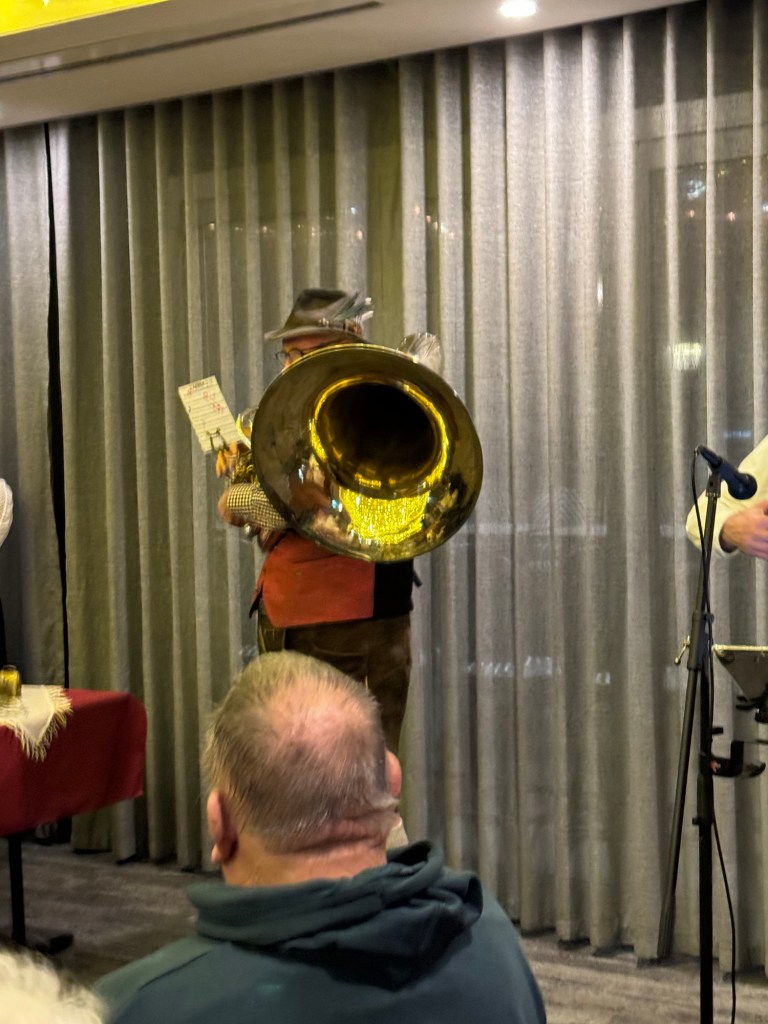
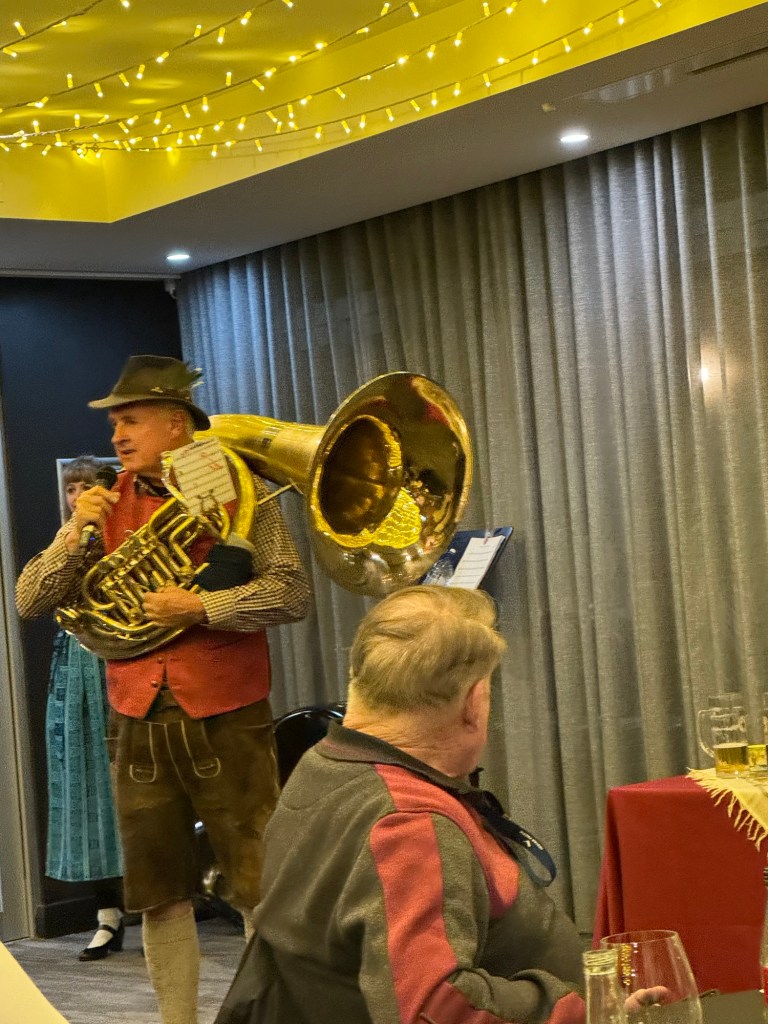
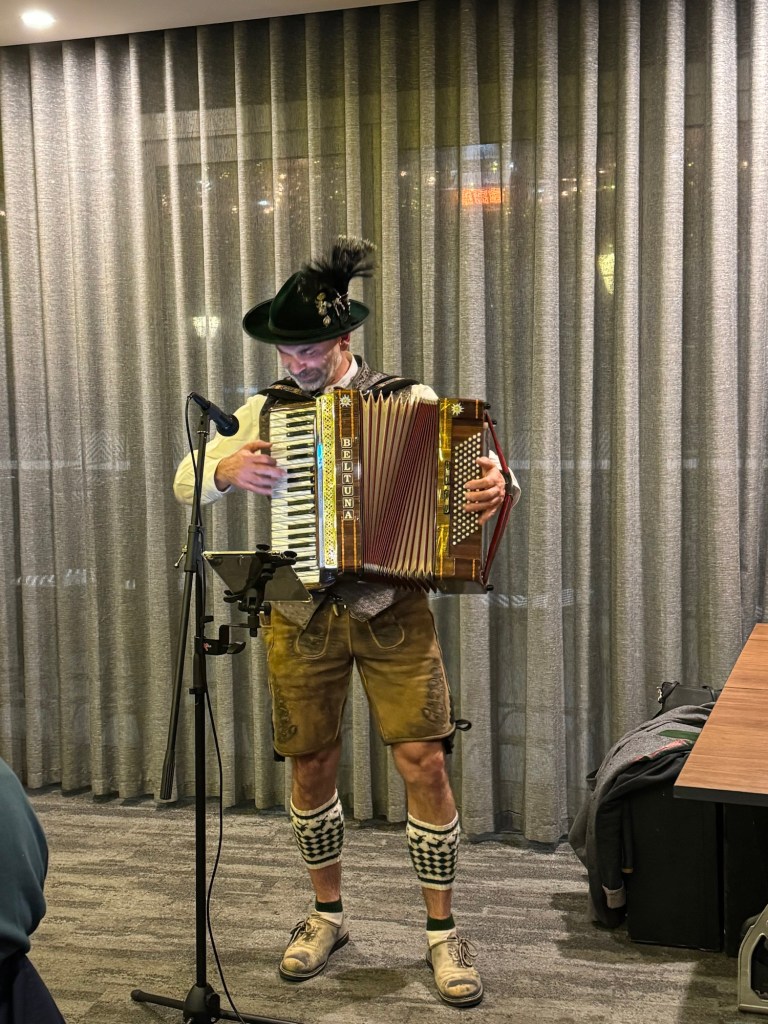
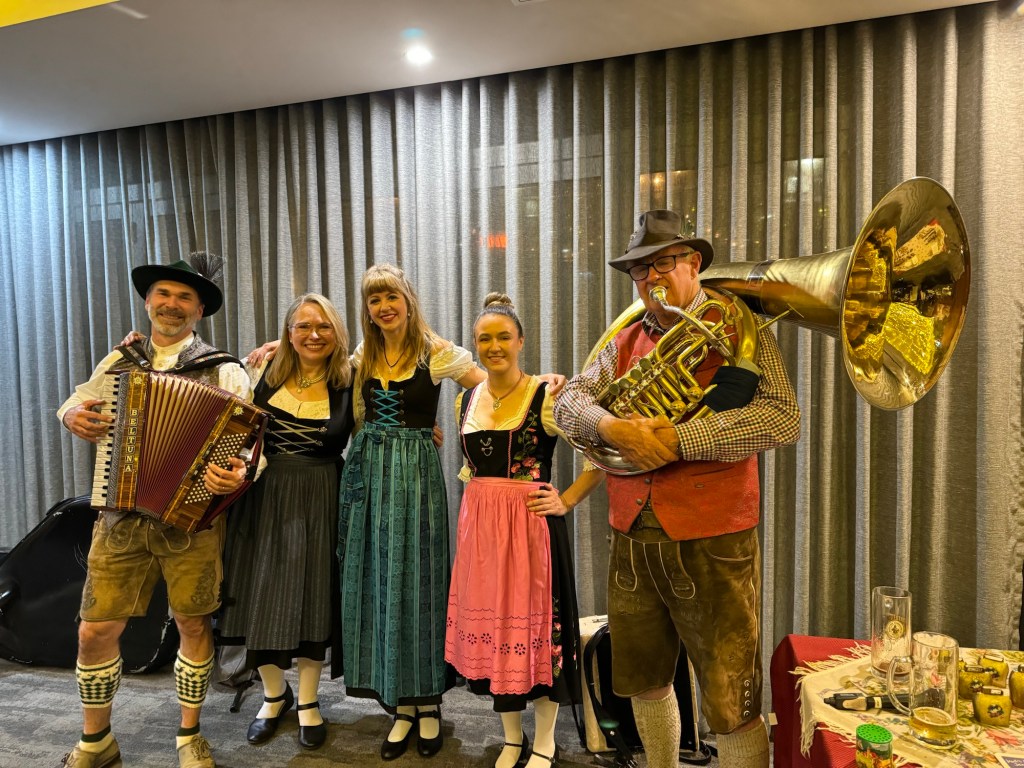
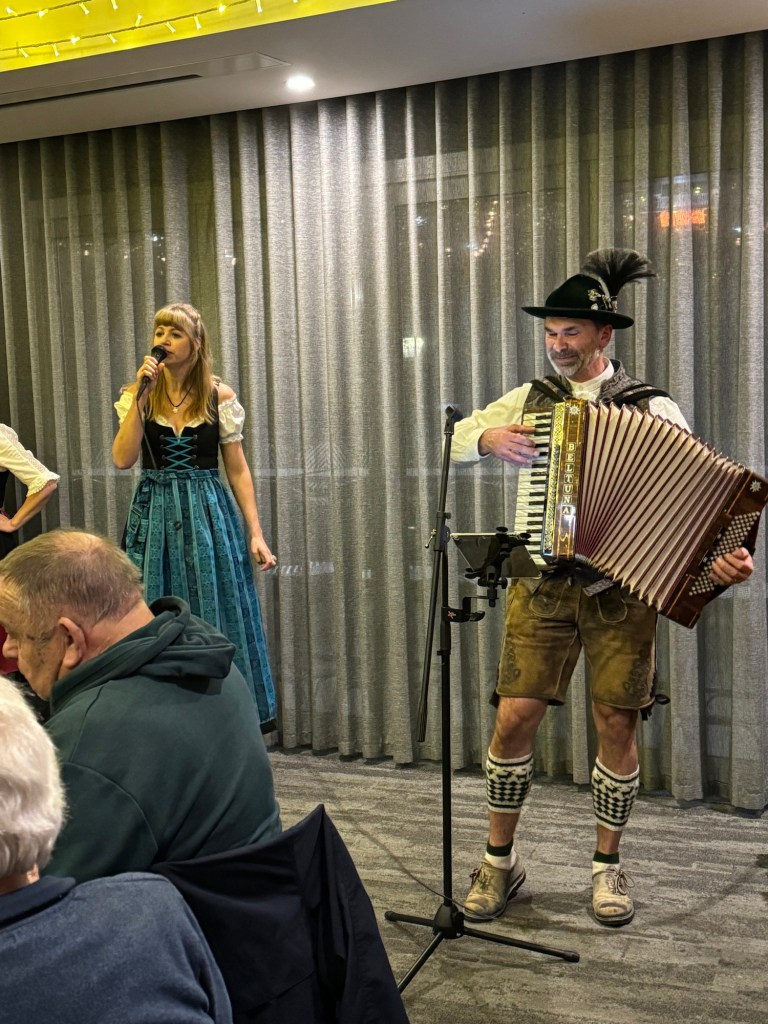
After dinner we were entertained by local musicians. They played the accordion, tuba and bells as well as sang. The tuba player shared the story of his tuba. It is known as a regimental tuba. They were used by mounted military bands in the eighteen hundreds. A standard tuba was impracticable because the large horn rim would be in front of the musician’s face. The regimental tuba’s horn rim is turned to the side so that the musician can see where he is going while riding a horse and steering the horse with his legs. Obviously this was before marching bands! These tubas are very rare and just how it disappeared from the regiment is unknown. It was found in the attic of an old house in Europe and made it’s way to an antique storage room. It was stumbled upon by our tuba player who purchased it and had it restored. He, and now we, appreciate the story and the music from this rare instrument.
We were amazed at the skill of the women who played the bells. Each woman had at least twenty four bells laid out on a table. How they knew which bell to ring and when was mind boggling to us!
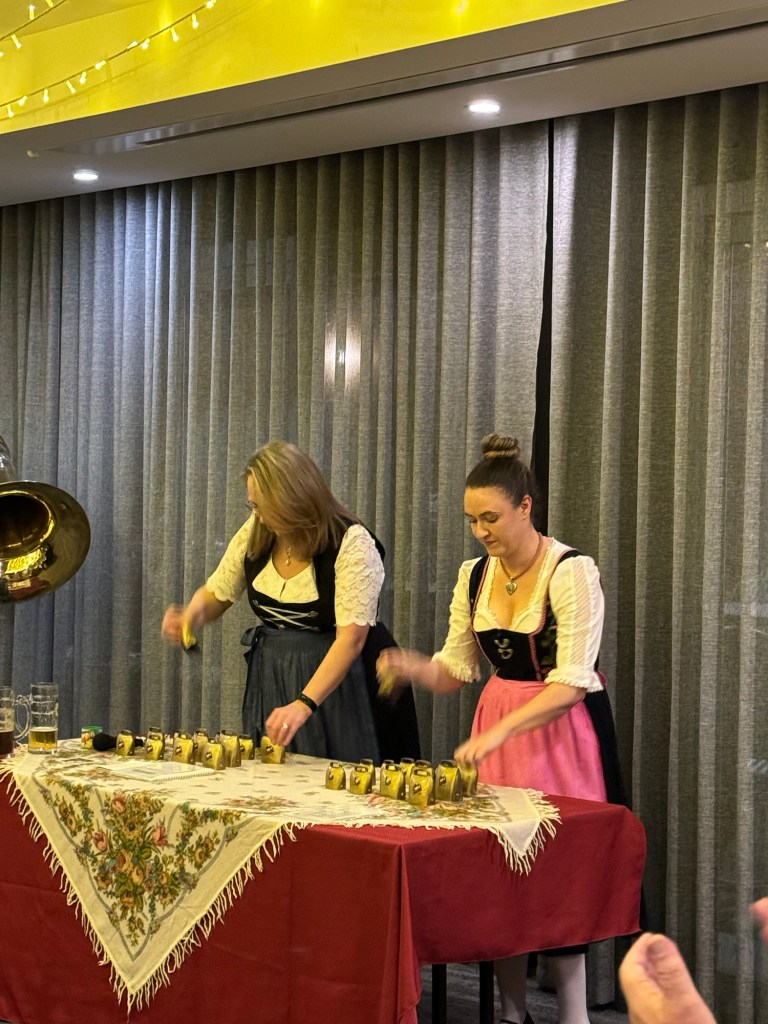

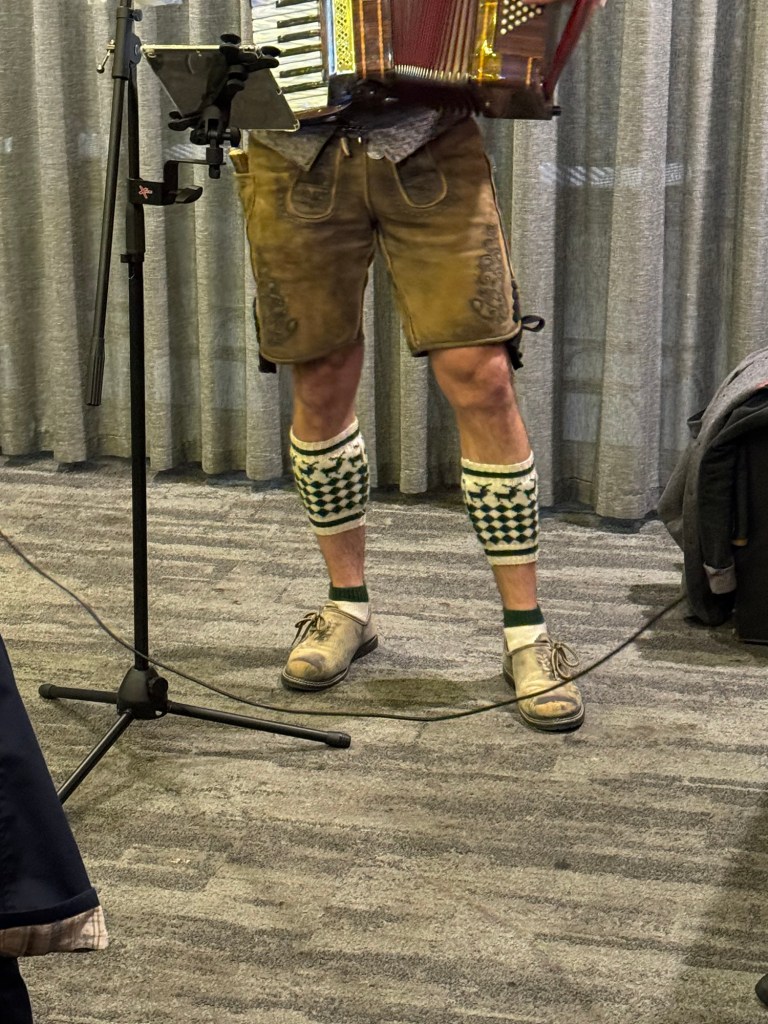
We also learned about the traditional dress and discovered that a lederhosen outfit are made of deer skin and cost $1,200. Another interesting fact is that the men’s wool socks do not cover the leg from the ankle to the calf. A sock portion covers the foot, then there is a bare space, and then there is a section that covers the calf. There are two reasons for that: first that part of the leg has no muscle so it doesn’t get cold and second it cuts down on the amount of wool needed to replace a sock and it makes it easy and more economical to just replace the bottom section of the sock when necessary rather than a whole sock.
It was a great evening filled with fun, music and good food and wine!

 Jim and Cory’s Adventures
Leave a comment