After the memorial service at the American Memorial we went directly to ceremony honoring Solomon Scouts and Coastwatchers.
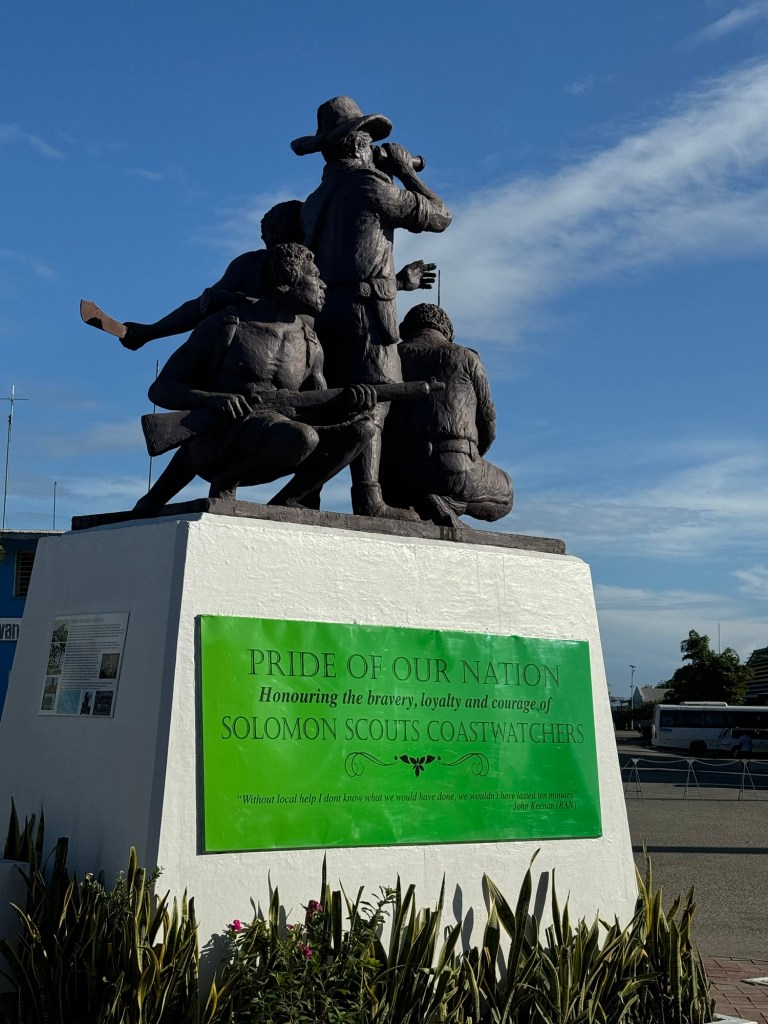
Prior to the war the Royal Australian Army created a network of “Coastwatchers”. They were mainly Europeans who remained behind enemy lines to notify the Allies about Japanese aircraft, naval, and ground forces in the area. These men had to remain concealed.
When the Japanese forces invaded the Solomon Islands many Solomon Islanders became the eyes and ears of the Allies. They were known as “Scouts”. These scouts were local men who risked their lives to report enemy activity to the coastwatchers. Other local men known as “carriers” hauled necessary equipment. For each of the twenty or so European Coastwatchers there were hundreds of Solomon Islanders hiding and feeding them. They spied on the Japanese patrols and naval operations for the Allies.
No coastwatcher was betrayed by a Solomon Islander, and no Allied serviceman working with them was ever injured. The Scouts rescued and returned to base pilots who crashed or were shot down. None were ever captured or betrayed.
The ceremony took place at the Solomon Scouts Coastwatchers memorial. It was very similar to the American memorial ceremony with the same dignitaries speaking.
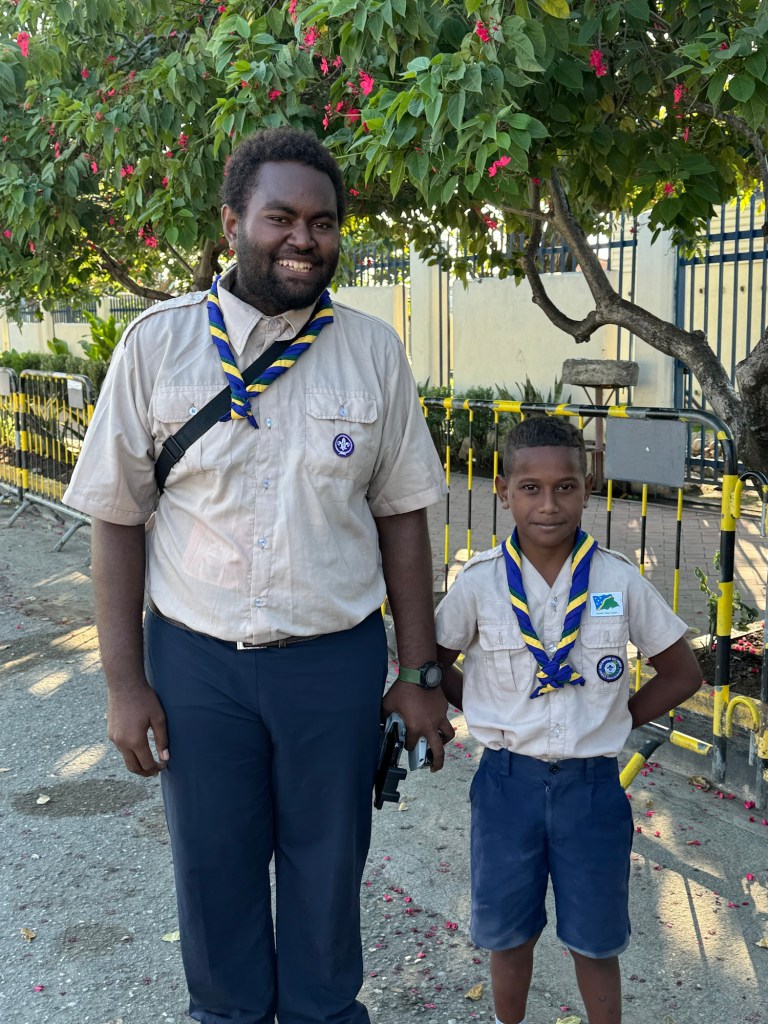
In addition to the Marine Honor Guard there were representatives from the Solomon Island police force who stood at attention during the whole ceremony along with the members of the boys and girls scout organization. The police marching band played the anthems to officially start the ceremony.
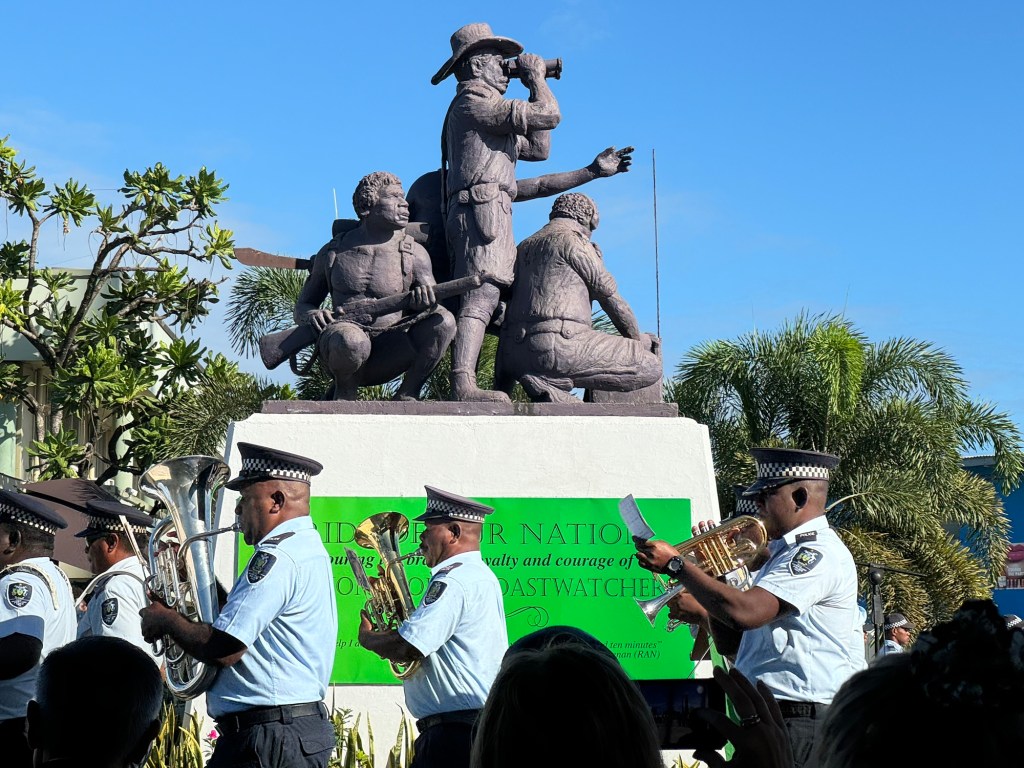
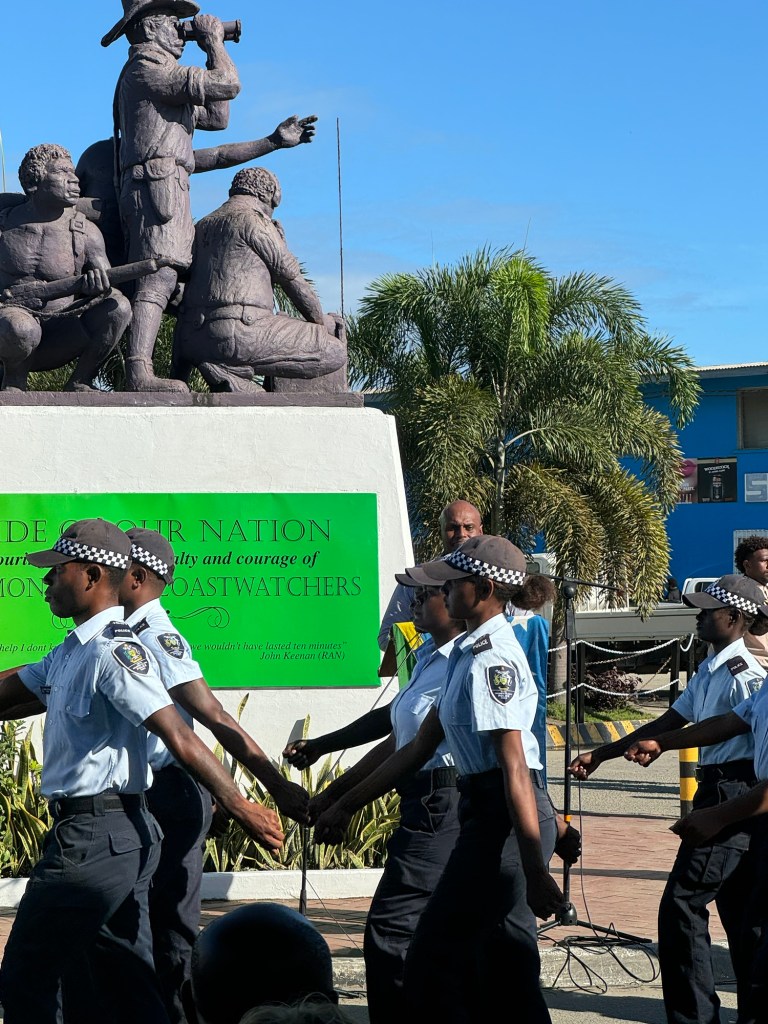

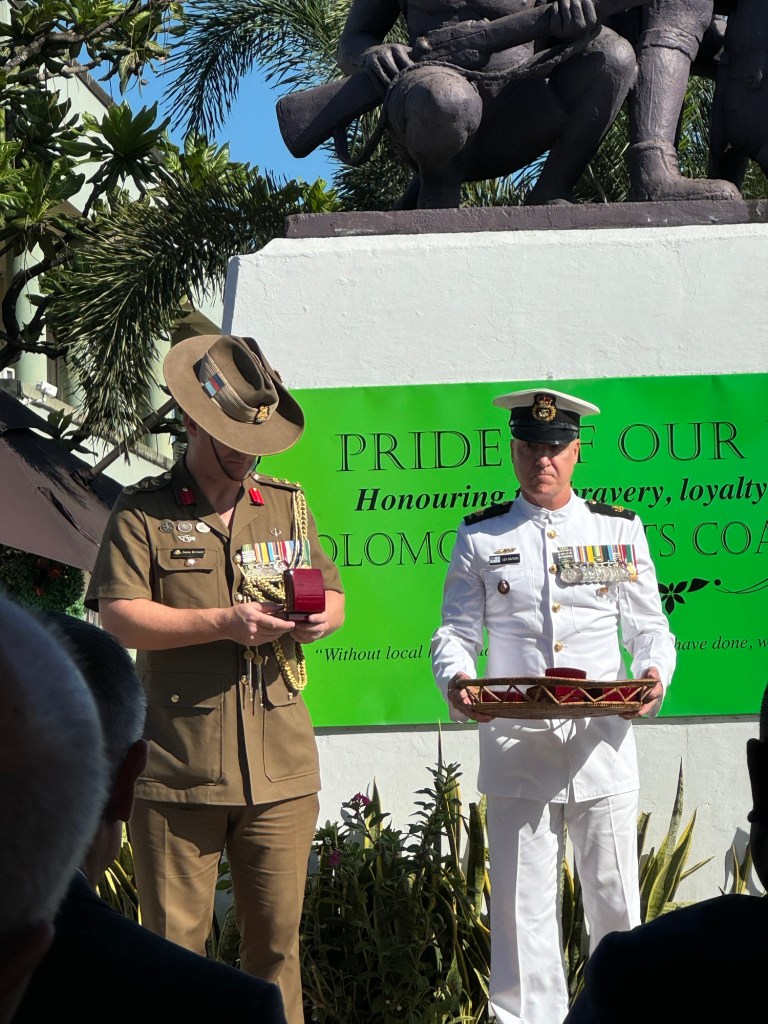
At this ceremony, in addition to the laying of wreaths, the Australian Government presented special medallions to the families of several Scouts and Coastwatchers.
Being a Coastwatcher was a dangerous job. On the surface, it seemed safe. Civilians from all walks of life merely posed as themselves; farmers, miners, traders, and natives would seemingly go about their business, pretending to be mere background players in the war. If caught by the Japanese, however, things could go south very quickly, and often did. One of the Coastwatcher heroes was Jacob Vouza. This is his remarkable story.
The Battle for Guadalcanal would last for six full months. Vouza was sent to scout for enemy outposts behind the Japanese lines in the early days of the U.S. campaign. It was during one of these scouting trips that he was captured by the Japanese. Unfortunately, his captors discovered an American flag in his loincloth.
The Japanese had been given very little intelligence about the American positions and tied Vouza to a tree to interrogate him. They tortured him for hours trying to extract information from him but Vouza wouldn’t give up anything. In the end, the Japanese bayoneted him in both of his arms, his throat, shoulder, face, and stomach, and then left him to die.
But Vouza didn’t die. Instead, he chewed through the ropes that held him to the tree and escaped into the jungle to warn the Americans. Before getting any treatment for his wounds, he told them about the Japanese forces headed for the Marines. By the time the Japanese arrived, the Marines were ready and inflicted heavy casualties on the Japanese at the Battle of the Tenaru River better known as the Battle of Aligator Creek. Vouza spent 12 days in the hospital recovering from his wounds. He would be back to service as chief scout for the Marines.
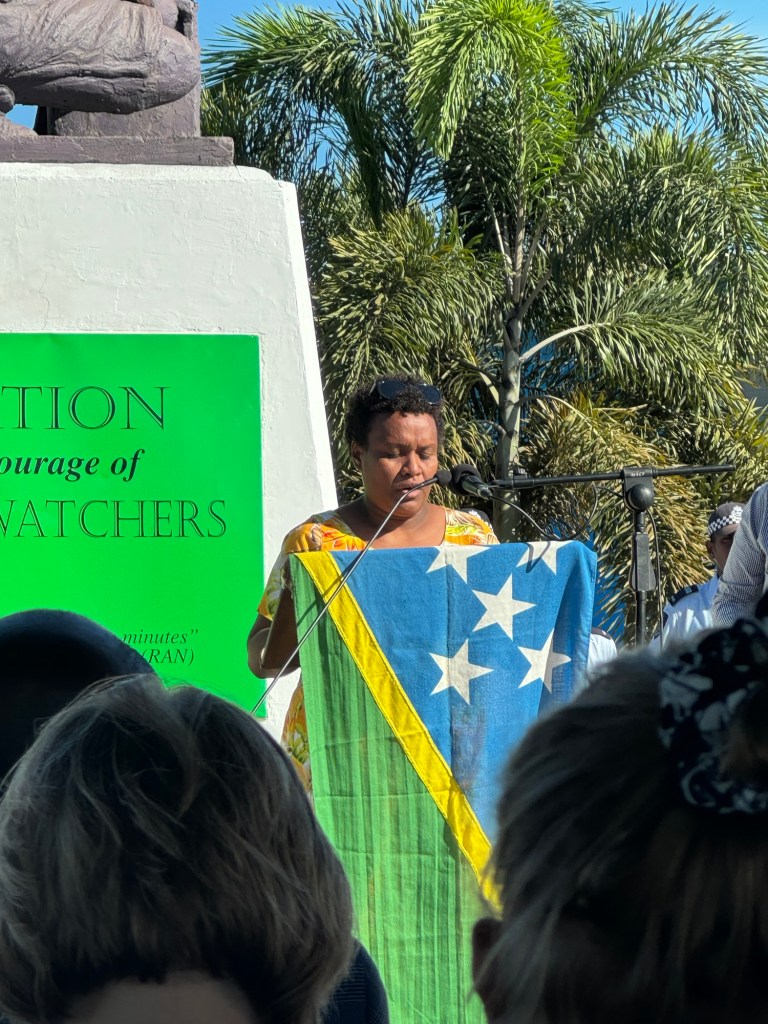
Jacob’s granddaughter, Regina Vouza, spoke at the ceremony and shared the story of,her grandfather’s bravery and how proud the family is for his actions and the beautiful monument dedicated to the Coastwatchers and Scouts.
In addition to the laying of wreath, the Australian Government presented medallions to honor some of the Solomon Scouts and Coastwatchers family members. The medallion recognizes that 27 Coastwatchers and 20 Solomon Islanders made the ultimate sacrifice and were killed in action during the Second World War. In addition to this, 18 Coastwatchers and 40 Solomon Islanders were captured during the course of the war. The Coastwatchers were also credited with rescuing 501 Allied military personnel and 450 civilians during the Second World War.
Solomon Islands Scouts and Coastwatchers who served during the Guadalcanal campaign (or a member of their surviving next of kin) are eligible to receive the medallion in recognition of acts done in service of the Allied war effort.

 Jim and Cory’s Adventures
Leave a comment