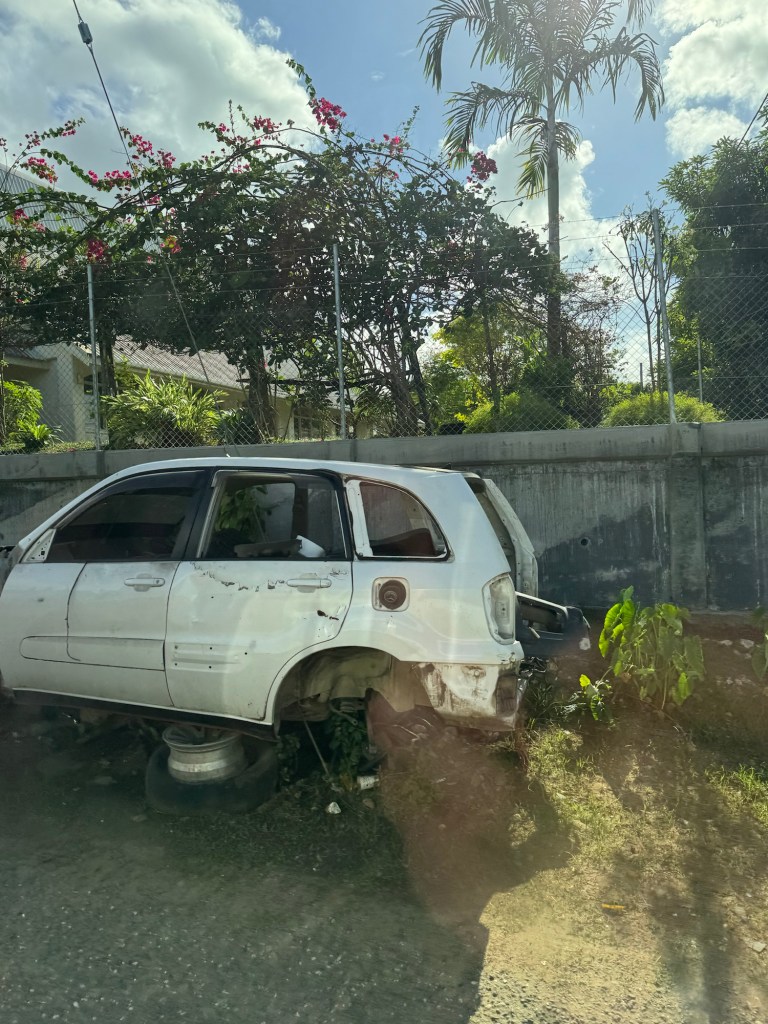
August 5th was our first day on the Island of Guadalcanal. After breakfast we headed to our first stop; the United States Guadalcanal War Memorial. Along the side of the road all the way to the memorial sat wrecked and abandoned cars. Our guide explained this to be the “bush mechanics”. People help themselves to parts and pieces of cars as the need arises: no questions asked!
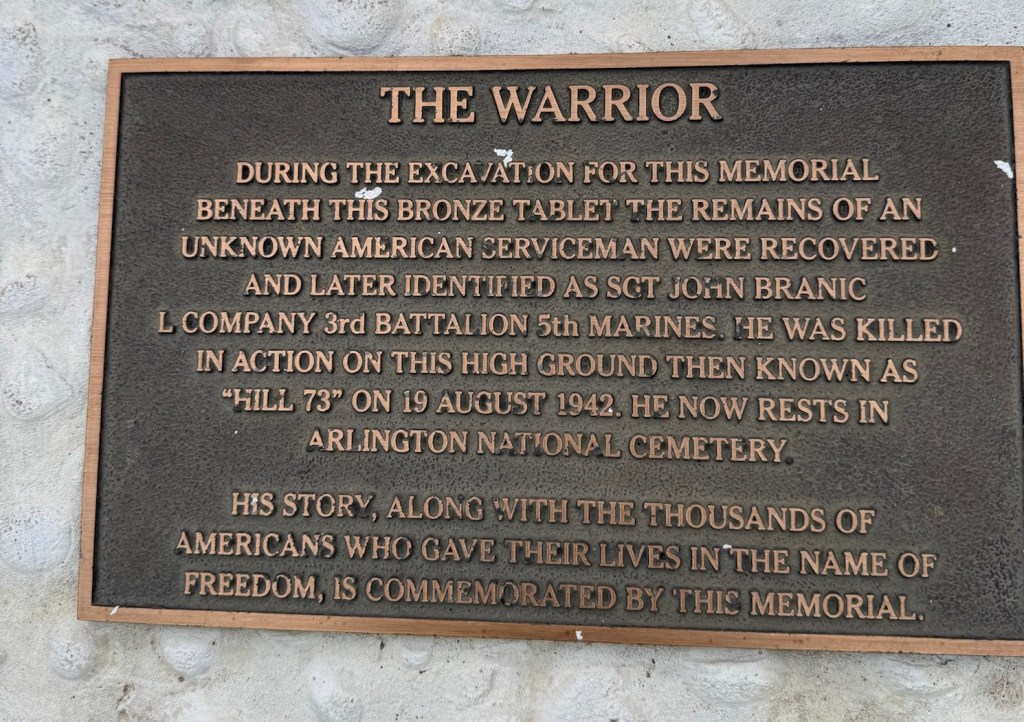
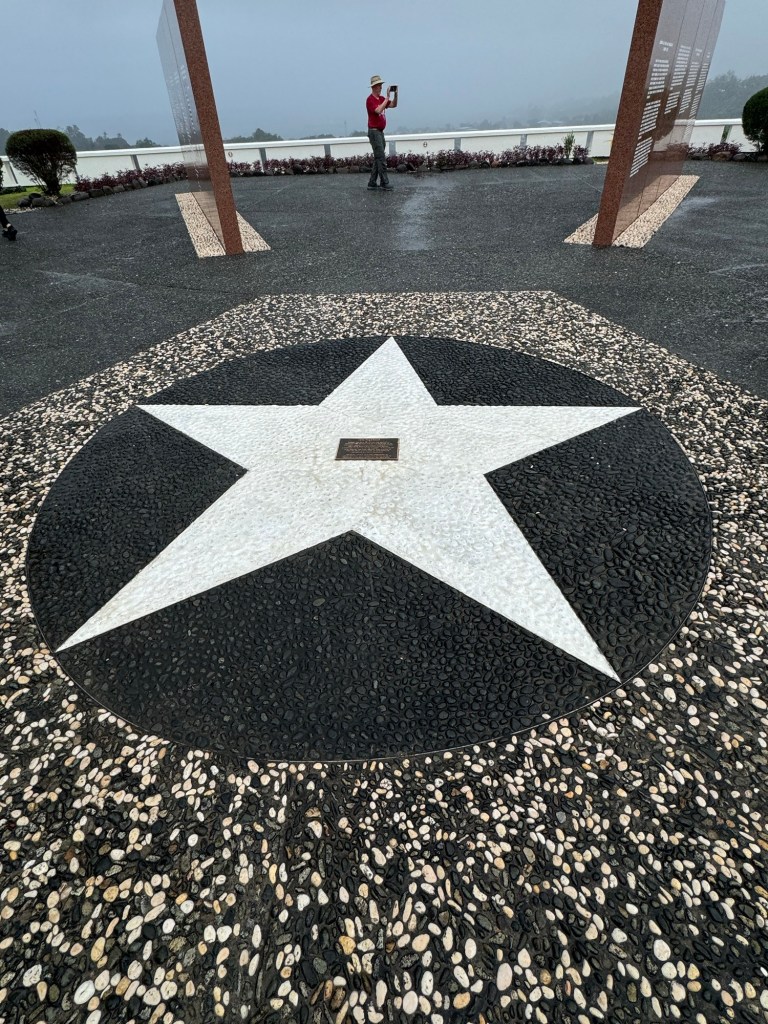
The memorial sits atop Hill 73 (The American army numbered the hills on the battlefield whereas the Japanese gave the hills animal names.) overlooking Iron Bottom Sound to the north and the Guadalcanal battlefields to the south , east, and west. The main monument is a tribute to the more than 4,000 sailors and soldiers who lost their lives on Guadalcanal. The intention was to place the main monument and the American flag at the center of the site; however, when the excavation began they discovered the grave of an unidentified American soldier so the location became the tomb of the unknown soldier. A resident in the area claimed that he had a ring from the marine buried on the hill and offered to sell it for $2,000. A buyer refused to pay such an outrageous price. The buyer returned several weeks later and found the resident significantly over served, offered him some more beer, and left with the ring. The ring was sent to Hawaii and, after the ring was cleaned and significant research was done, it was discovered that the ring belonged to Sargent John Brandi (Sargent Brandi now rests in Arlington National Cemetery). Several additional monuments have been placed on the site to commemorate the significant battles of the campaign.
As we walked the memorial and read the monuments it began to rain. Before we could get near the bus it was pouring. As we drove down the hill the rainwater flooded ditches alongside the road. Hugh puddles formed numerous potholes in the streets. It was a stark reminder of what our American solders endured during the battle of Guadalcanal realizing that the island gets over 600 inches of rain each year.
After leaving the memorial we stoped at Alligator Creek the location of the first major land battle on the island. After achieving their objective of securing the airfield, the marines began setting up a defensive perimeter around the airfield. Meanwhile the Japanese began planning to retake the airfield. They landed approximately 900 officers and men east of the marines perimeter and advanced towards the airfield. Led by Colonel Ichiki they made contact with the marines on the night of August 20. By morning the Japanese had 777 men killed and Colonel Ichiki had committed suicide. Forty four marines had lost their lives. We walked the battlefield and discussed the battle with our historian and local guides.
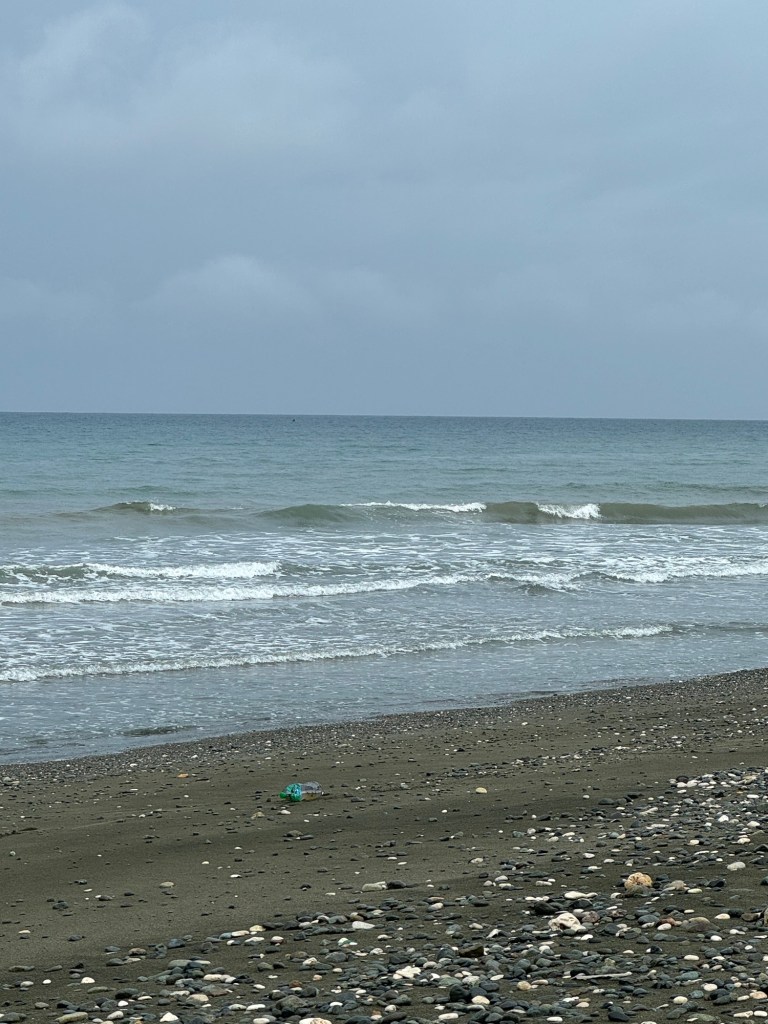
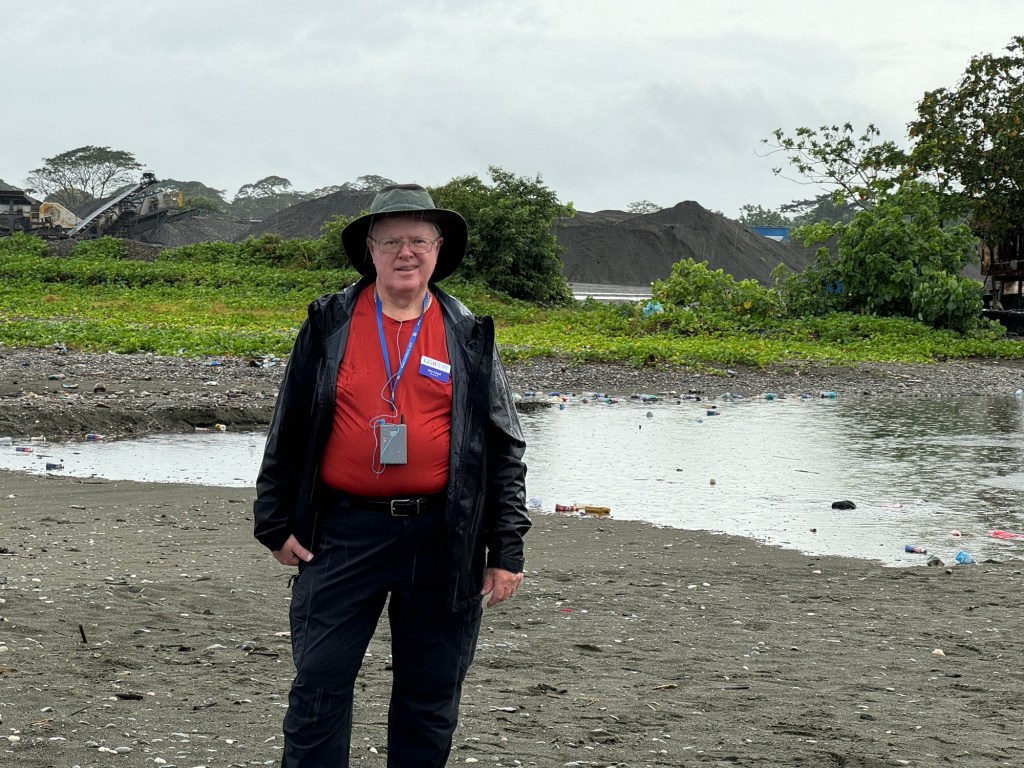
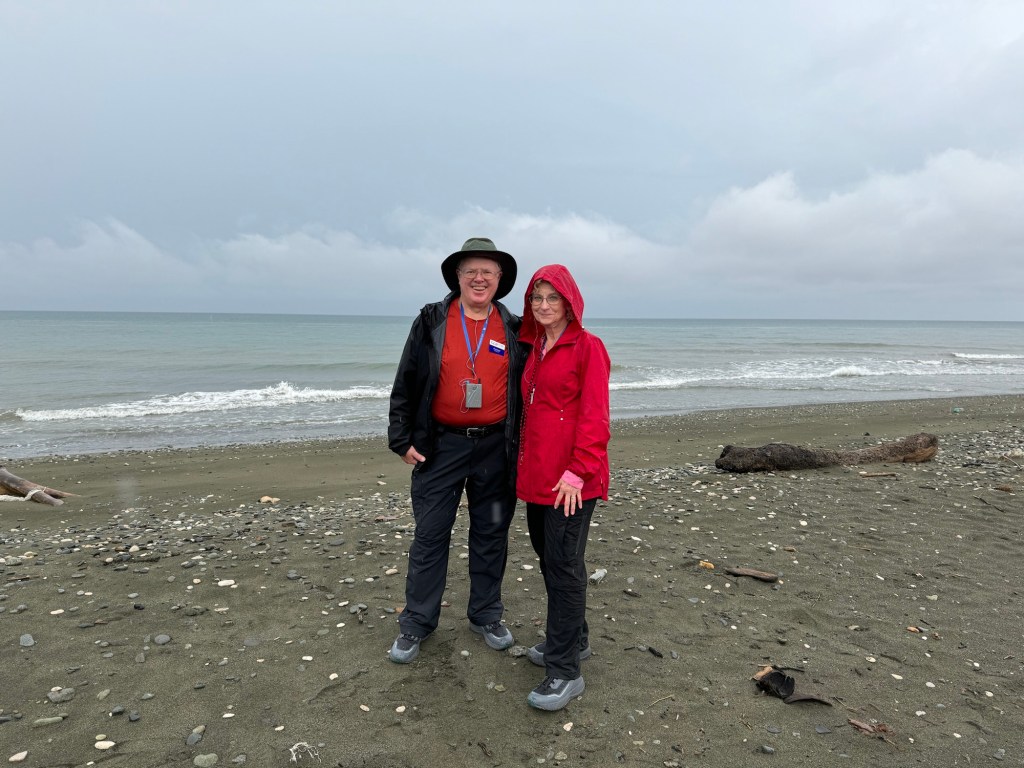
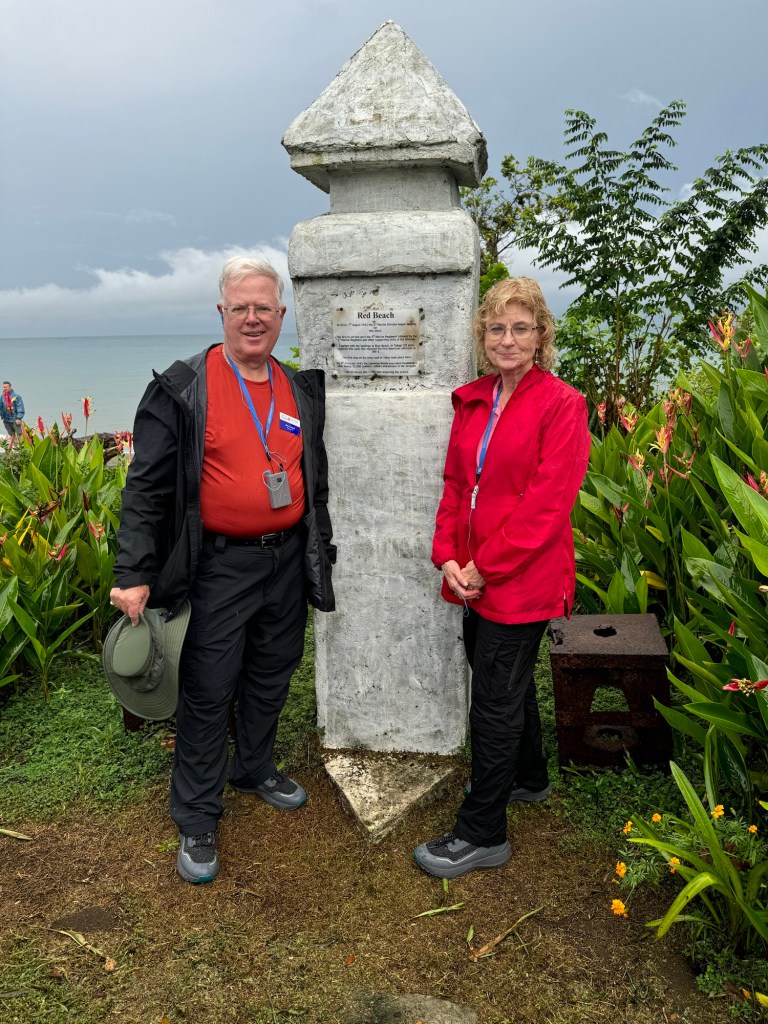
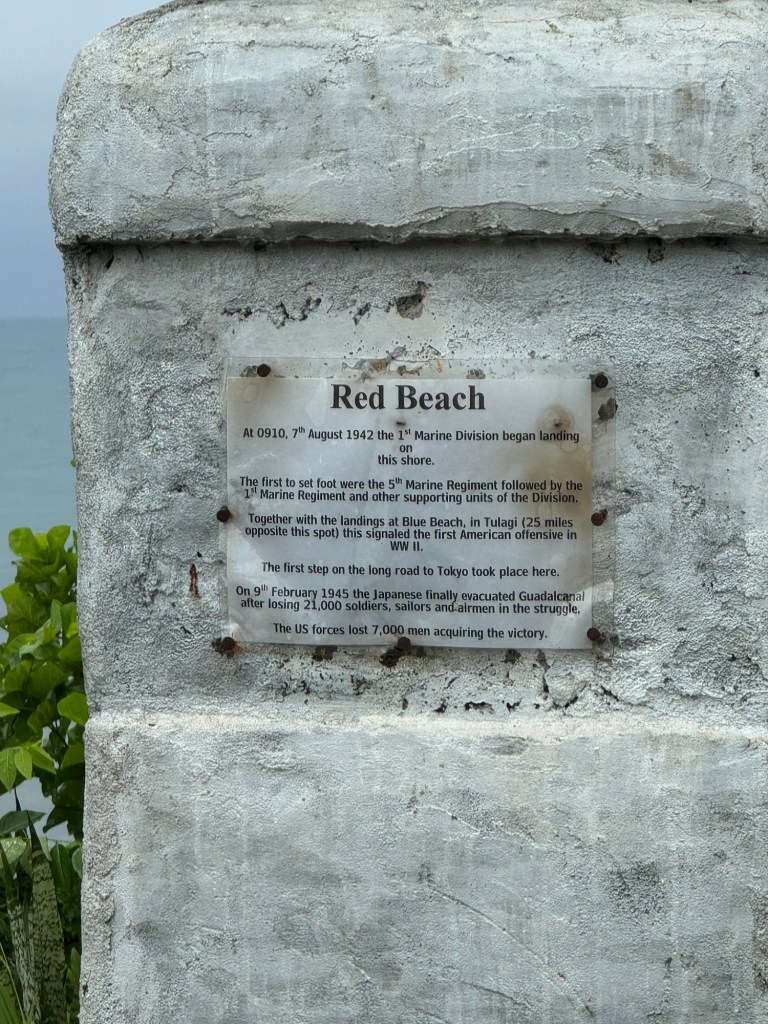
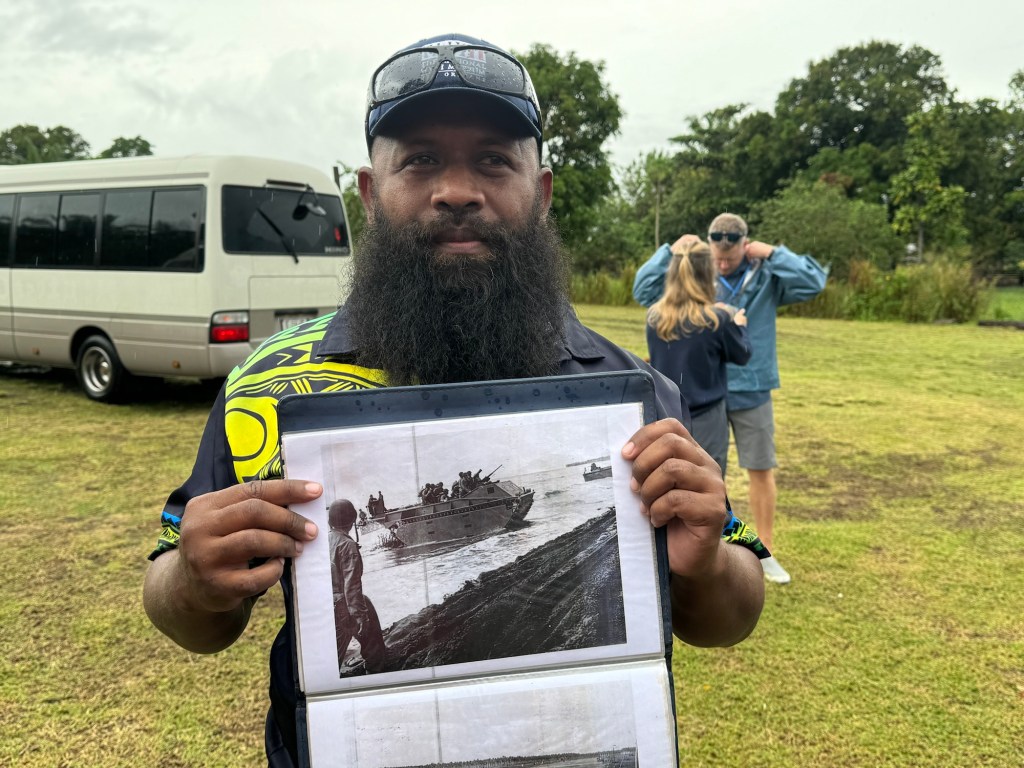
Our next stop was at Red Beach the location where the marines landed. Along the way we passed the place where the third airstrip (also the second fighter airstrip constructed by US forces), Fighter 2 was located. It is now a nine hole golf course. Prior to the landing, the island was bombarded by US Naval ships and aircraft. The Japanese were fully aware of an impending attack but the Japanese on the island were primarily civilian construction workers who fled into the jungle. The landing was unopposed and the marines quickly occupied their objective, the Japanese airfield under construction and soon to be known as Henderson Field.
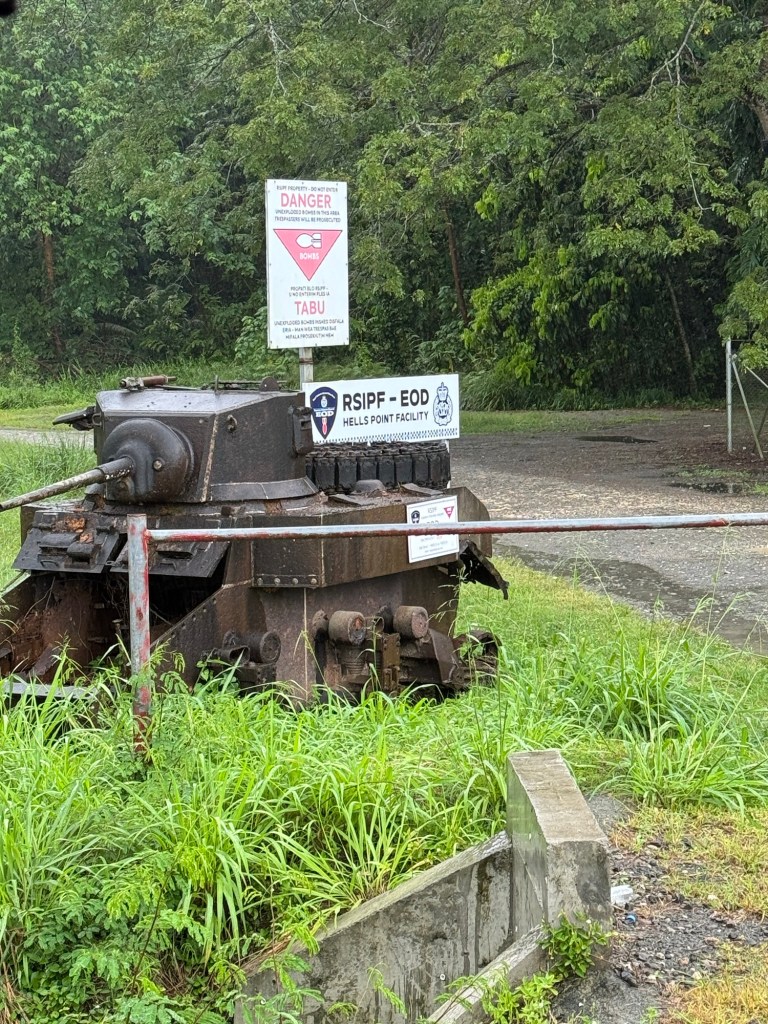
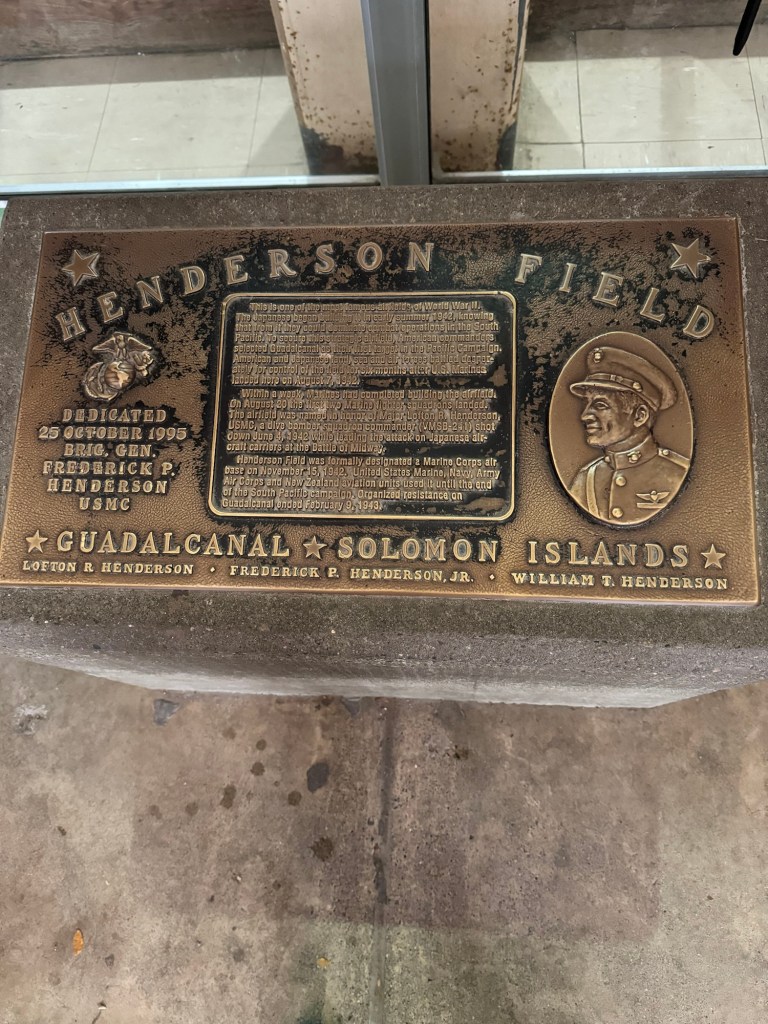
From Red Beach we drove to the Honiara Airport formally known as Henderson Field. Along the way we passed a light Japanese tank located at the entrance to the Hells Point Facility. Hells Point is the ordinance disposal facility on the island which is still active today. Unexploded ordinance is recovered by explosive experts and brought to the Hells Point Facility for destruction. Ordinance too dangerous to relocate is destroyed in place.
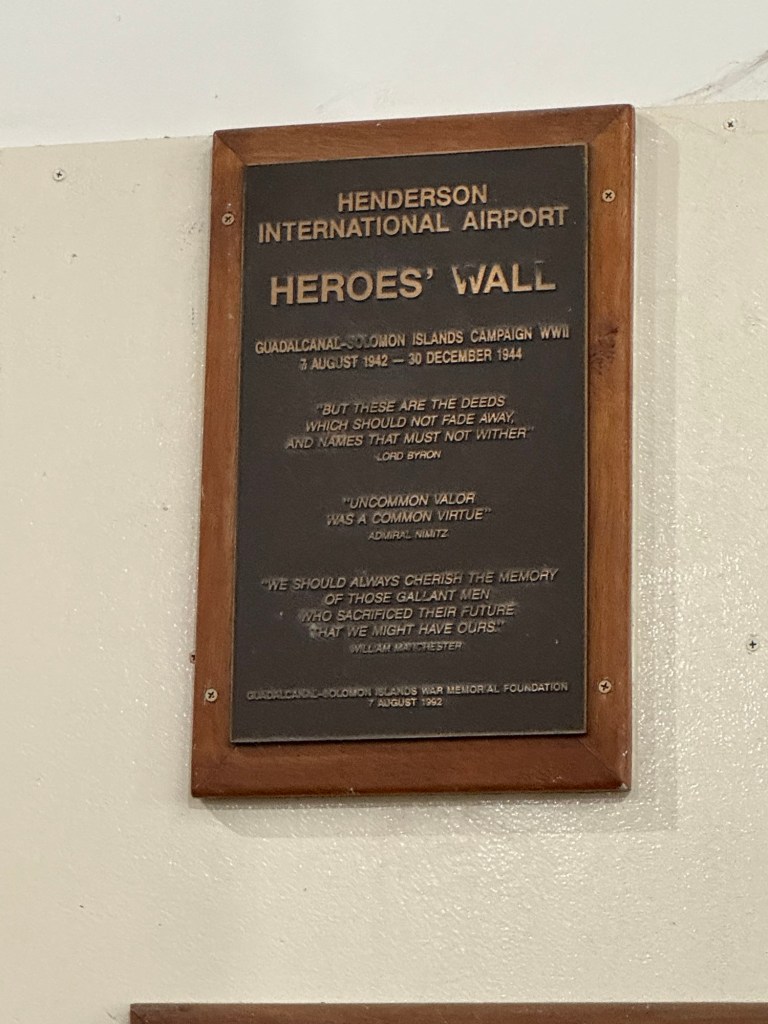
Inside the airport there are a number of plaques commemorating the Battle of Guadalcanal. Southeast of the current landing strip is the former location of the airstrip known as Fighter 1. Nothing is left of Fighter 1. Almost all airfields in the Pacific Theater, both American and Japanese, were dirt fields. Across the street from the International Terminal is located the Memorial Garden where people can memorialize those who served on Guadalcanal. Another heavy rainstorm cut short our visit to the Memorial Garden.
Just outside of the Honaria Airport property is the location of the Betikama School War Museum. The museum contains a number of heavily damaged crashed airplanes, weapons, and implements of war. It was another sad reminder of the evils of war.


 Jim and Cory’s Adventures
Leave a comment